Cryptocurrency Adoption Trends Among Players in Regional Digital Card Environments
Ellis Keller · Sep 16, 2026

Cryptocurrency Adoption Trends Among Players in Regional Digital Card Environments
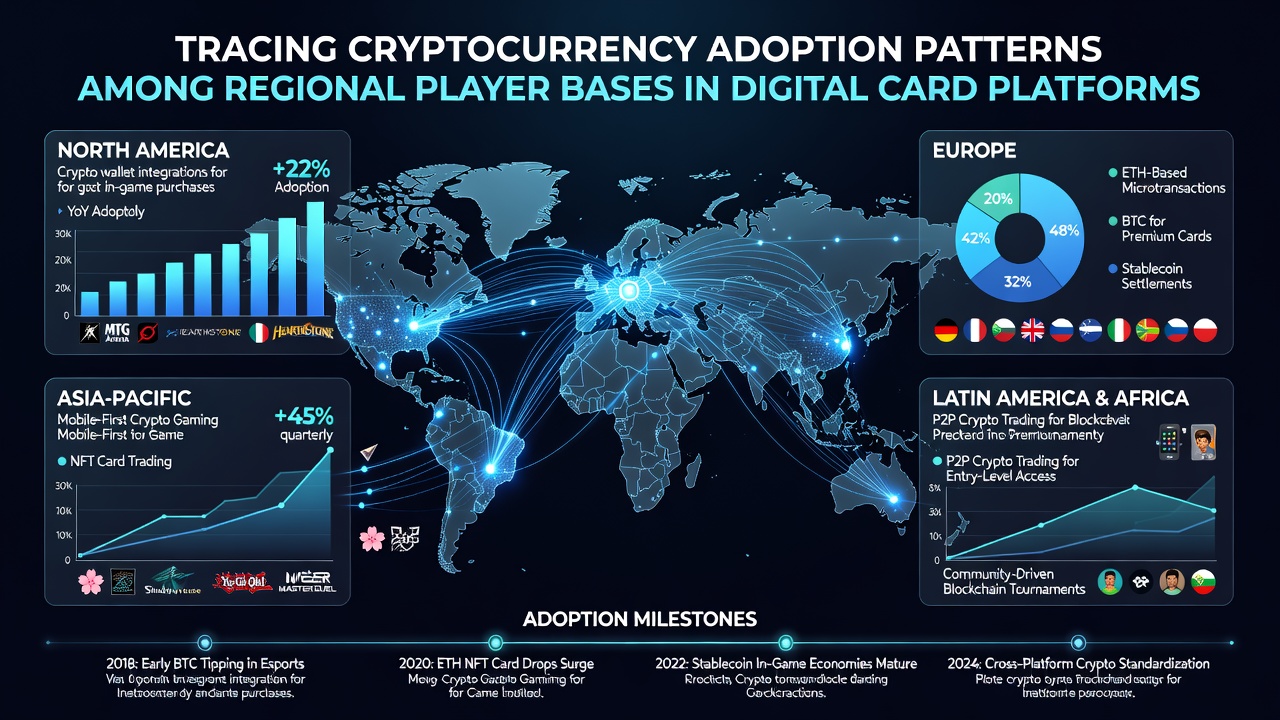
Data from industry tracking services show that cryptocurrency usage in digital card platforms has followed distinct regional trajectories since the early 2020s, with adoption rates varying sharply by geography and regulatory climate. In North America, platform operators report steady increases in crypto deposits from players in states with established online gaming frameworks, while European markets display more fragmented patterns tied to evolving payment directives.
North American Patterns Show Steady Integration
Reports from Canadian provincial regulators indicate that crypto transactions on licensed card platforms rose during 2025 and continued climbing into September 2026, driven largely by players in Ontario and British Columbia who favor stablecoins for lower transaction fees. US markets reveal similar movement, with operators noting that Bitcoin and Ethereum remain the dominant choices in jurisdictions where online card rooms operate under state oversight, although adoption stays concentrated among higher-volume participants rather than casual users.
Research from academic groups at the University of Nevada Reno highlights how these patterns correlate with existing banking infrastructure, where crypto serves as an alternative when traditional payment rails face delays or restrictions. Observers note that North American player bases tend to combine crypto with fiat options, creating hybrid usage profiles that differ from more exclusive crypto ecosystems elsewhere.
Asian Markets Demonstrate Higher Velocity Usage
Across parts of Southeast Asia, transaction volume data compiled by platform analytics firms point to elevated cryptocurrency activity on digital card sites, particularly in regions where local banking options encounter volatility. Players in these areas often route funds through multiple cryptocurrencies within short timeframes, a behavior researchers link to currency hedging needs and cross-border play preferences.
Figures from Singapore-based industry reports show that stablecoin adoption among card platform users accelerated in the first half of 2026, coinciding with platform updates that streamlined wallet integrations. This stands in contrast to slower uptake observed in East Asian markets, where regulatory caution has kept crypto participation limited to offshore-facing platforms.
European Variations Reflect Regulatory Diversity
European player bases present a patchwork of adoption levels shaped by national rules on digital payments. Data released by the European Gaming and Betting Association in mid-2026 indicate stronger crypto uptake in certain Eastern European markets compared with Western counterparts, where stricter anti-money laundering requirements have slowed integration. Players in these higher-adoption zones frequently cite speed and privacy as primary drivers when shifting activity toward cryptocurrency-enabled card rooms.
Studies from research teams at the University of Malta document how these regional differences influence tournament participation rates, with crypto-heavy player pools showing distinct session length distributions compared with traditional payment users. Yet the same reports emphasize that overall European crypto penetration on card platforms remains below North American levels as of September 2026.
Emerging Regions and Cross-Border Flows
Platform operators tracking Latin American and African user segments report growing crypto experimentation, often concentrated among younger demographics already familiar with mobile wallet technologies. These patterns mirror earlier adoption curves seen in Asian markets, where transaction velocity outpaces total user numbers.
Chainalysis industry analyses reveal that cross-border play facilitated by cryptocurrency creates overlapping regional signatures, with funds moving between platforms in different time zones during peak hours. This interconnected activity complicates efforts to isolate purely regional trends but provides clearer visibility into how payment preferences evolve when traditional banking channels prove inconsistent.
Conclusion
Regional cryptocurrency adoption in digital card platforms continues to reflect a combination of local regulations, banking conditions, and player demographics. September 2026 data underscore ongoing divergence across continents, with North American and Southeast Asian markets leading in transaction volume while European patterns remain more constrained. Future tracking will depend on continued access to anonymized platform metrics and regulatory reporting from diverse jurisdictions.